Log in
The methodology

A new approach for nature-integrated sourcing

Designed by mapping landscape conditions onto existing supply chains, to surface hidden dependencies.

Commodities resolving into exposure clusters A commodity list ranked by volume. Its origin column is mapped onto a continuous landscape field. All nine commodities resolve into two exposure clusters, and rank does not predict which. EXPOSURE CLUSTER EXPOSURE CLUSTER COMMODITIES BY VOLUME

Organizing around landscapes instead of suppliers makes relationships visible and coordinated action possible.

Four sectors sourcing locations within one shared watershed SHARED WATERSHED AGRICULTURE FOOD & BEV PERSONAL CARE PHARMACEUTICALS

Reframe the geography

For any sourcing geography, the framework produces new parameters - or fingerprints - defined by the specific variables driving exposure. Ecological conditions, not borders or commodity categories, determine what this analysis reveals.
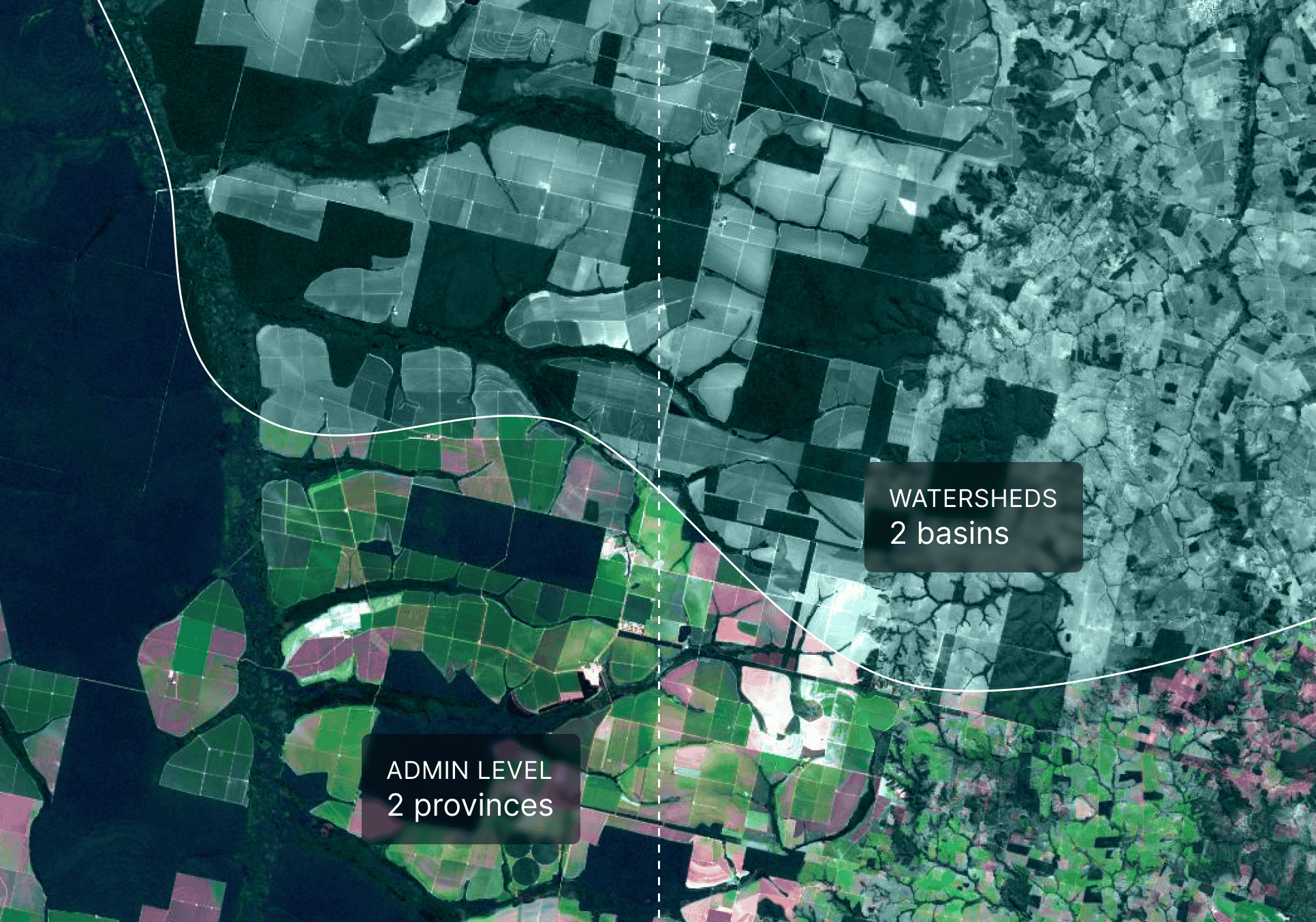
Reframing geography: a sourcing region redrawn as an ecological fingerprint of the variables driving exposure.

Surface shared exposure

No company sources from a landscape alone. Fingerprints highlight clusters of stakeholders drawing from the same sourcing geography, and reveal interdependencies that make coordinated responses structurally possible.
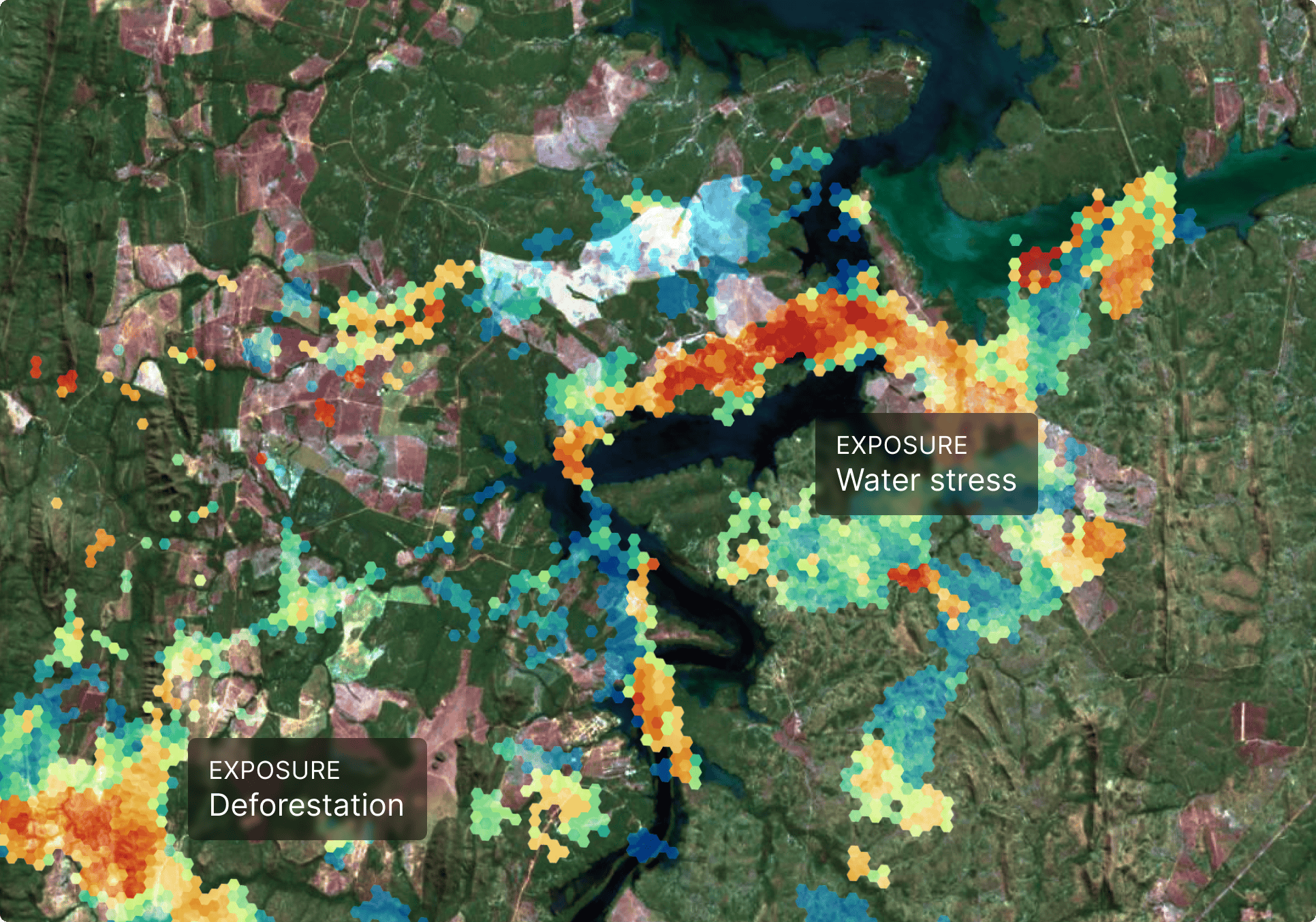
Grouping shared exposure: separate sector actors resolving onto one shared landscape they all depend on.

Translate exposure to response

Each set of loss driver variables identified in a fingerprint points toward a matched class of responses. Outcomes - individual or coordinated - feed back into subsequent landscape analyses, deepening understanding and compounding resilience with every cycle.
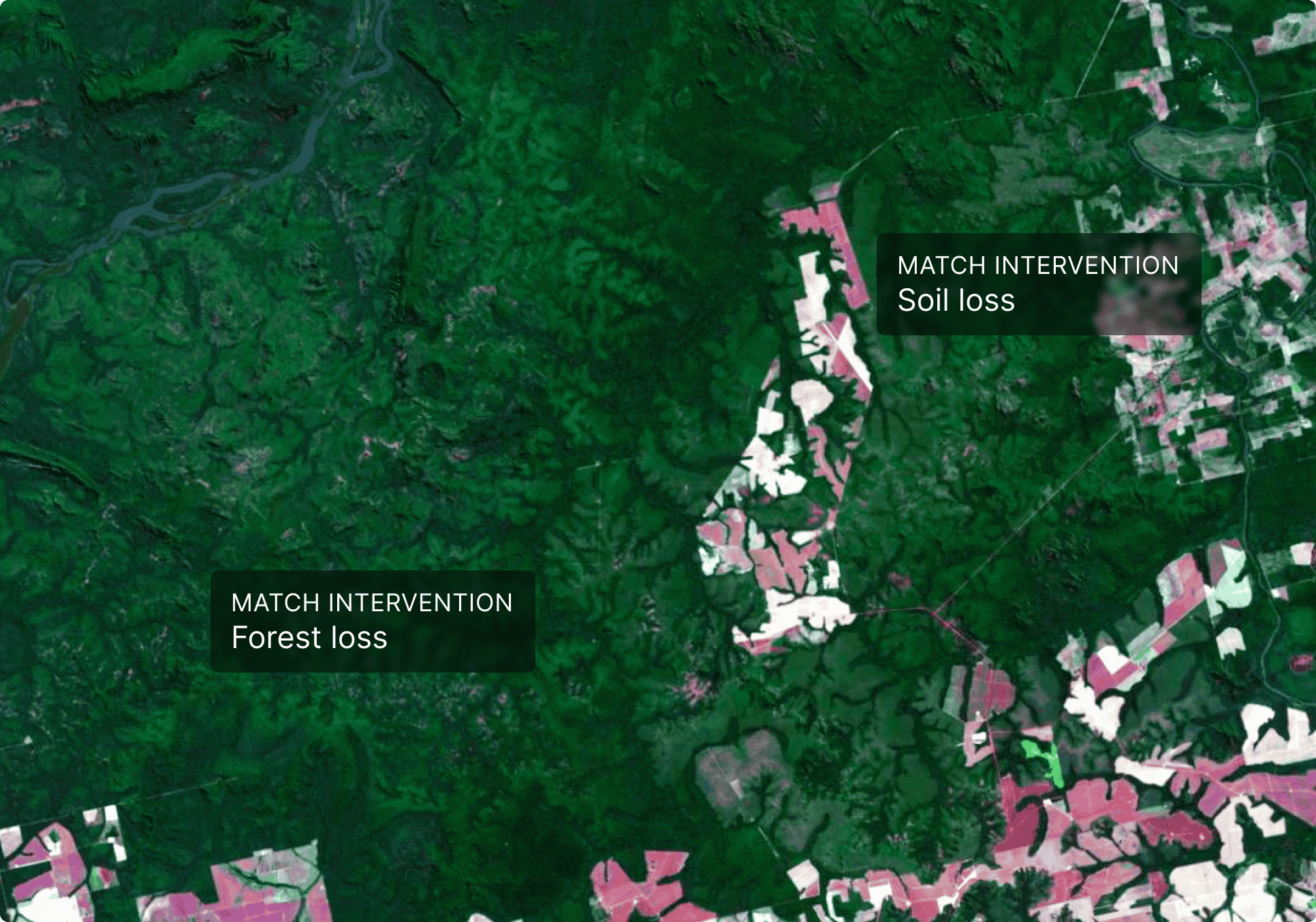
Translating exposure into action: interventions and partners mapped to loss drivers, feeding back into planning cycles that compound resilience.

Start managing landscapes within your existing workflow